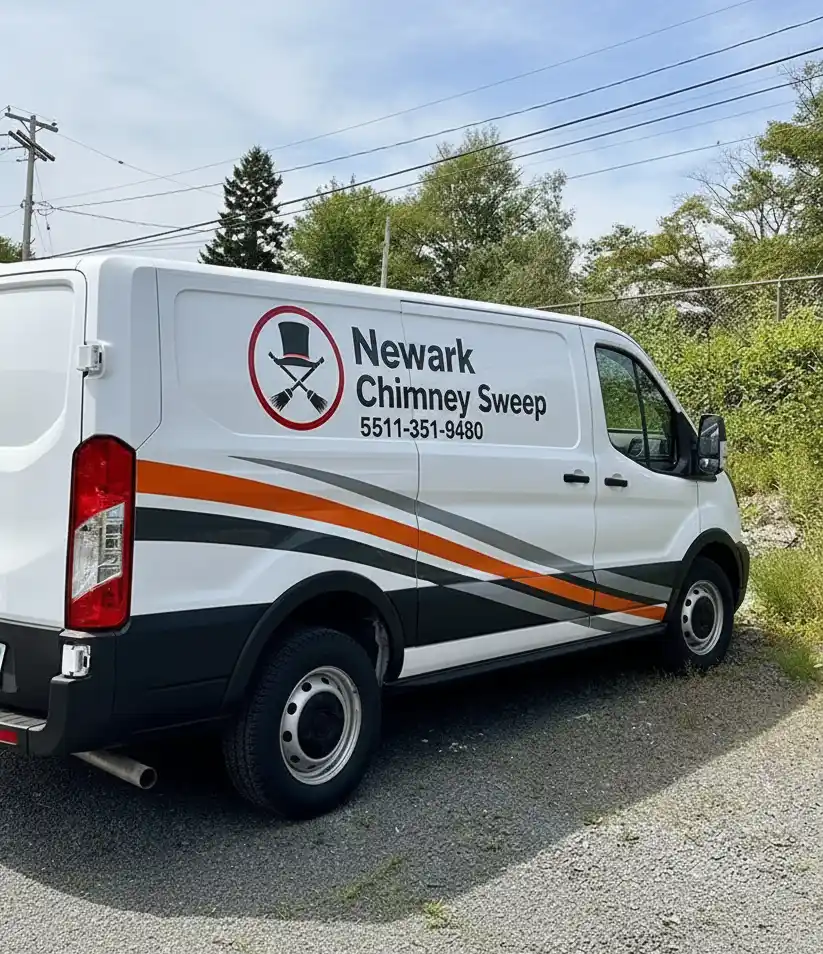
Every fire you burn in a Newark fireplace leaves a little more creosote bonded to the flue wall, and that residue is exactly what feeds a chimney fire. We sweep from the top down and the bottom up, contain the mess with filtration, and leave the firebox cleaner than we found it. The wood-burning culture across Essex County means many of these chimneys see heavy use and need a sweep more often than the once-a-decade myth suggests. We will tell you honestly whether your flue actually needed it, and if it did not, you will hear that too, with no manufactured urgency. Phone 551-351-9480 to schedule a HEPA-clean sweep at your Newark address.
- HEPA-filtered, no-mess process
- Flue, smoke chamber, and damper cleaned
- Cap and crown checked from the roof
- Before-and-after photos
- Honest sweep-or-skip recommendation
The Case For Handling This Properly Without the Hassle
Good sweeping is a controlled, contained job from start to finish. The room is shielded and the HEPA vacuum runs the entire time we work the brush through the flue. We check the cap, the crown, and the damper while we are at it, since they are easiest to assess from up top. That attention to detail is what the photos end up proving.
What wears out most Newark chimneys is not fire at all — it is water and time. Rain driven against the brick, snow melting and refreezing on the crown, and the swing between cold nights and sunny days all open the stack to moisture. What began as a hairline crack widens into an open joint, then into water reaching the flue itself. The owners who get decades out of a chimney are the ones who treat water as the real threat it is.
A thorough sweep treats your living room as carefully as the flue. We isolate the hearth, scrub the flue mechanically, and capture the creosote in the vacuum as it comes loose. We finish by checking the damper, clearing the smoke shelf, and confirming the firebox is cleaner than we found it. We hold the work to that standard whether anyone is watching or not.
How We Carry Out This The Right Way the Local Way
Done properly, a sweep leaves no trace in the room behind it. We isolate the hearth, scrub the flue mechanically, and capture the creosote in the vacuum as it comes loose. We finish by checking the damper, clearing the smoke shelf, and confirming the firebox is cleaner than we found it. That is just how we run every Newark service call.
We have boiled the job down to a few clear steps you can count on. A quick phone triage tells us what to bring, so the visit gets the job done rather than scoping it for later. The room is shielded, the job is finished right, and you get a clear summary instead of a vague "all set." We have boiled it down to a process you can actually count on.
Done properly, a sweep leaves no trace in the room behind it. We isolate the hearth, scrub the flue mechanically, and capture the creosote in the vacuum as it comes loose. We finish by checking the damper, clearing the smoke shelf, and confirming the firebox is cleaner than we found it. It is a small thing that says everything about the job.
The Building Stock Across The Region You Can Trust in Essex County
Newark and the surrounding Essex County towns are full of older homes, and older homes mean older chimneys. The wood-burning culture here keeps fireplaces in regular use, and that use shows up as a particular set of wear patterns. We bring that pattern recognition to every call rather than guessing on an unfamiliar build. We scope each job to the specific stack rather than a generic checklist.
The difference between a good sweep and a bad one is mostly the prep. We isolate the hearth, scrub the flue mechanically, and capture the creosote in the vacuum as it comes loose. Every sweep doubles as a look at the flue, and we flag anything worth knowing in plain language. That is just how we run every Newark service call.
The Danger In Skipping The Job Plain and Simple
Behind every sweep and repair is the same goal: a fire that stays contained. Glazed creosote ignites at temperatures a normal fire reaches, and a gap in the liner gives that heat a path to the framing. These are not abstract concerns: chimney fires and carbon monoxide incidents happen every winter. That is the lens we bring to every Newark home we work on.
Trust is the whole game in chimney work, because almost everything we inspect is somewhere you can never see. The "$99 special" that becomes a thousand-dollar invoice, the invented emergency, the upsell on a sound flue — that is the wrong way, and it has given the whole trade its bad name. Newark Chimney Sweep refuses to work that way: we grade what we find honestly and put it all in writing before any work starts. We would rather keep a customer for twenty years than win one oversold job today.
The difference between a good sweep and a bad one is mostly the prep. We seal the firebox with film and keep the system under negative pressure so air flows toward the vacuum, not the room. We grade what we remove and document it with photos, so you know the real condition for yourself. We document it so you can see the work was done properly.
Connecting the parts of chimney care
A chimney is a system, so chimney sweep rarely stands alone — it connects to pre-sale chimney inspection, chimney leak repair, flue cap, chimney crown repair, stainless flue liner, and our crew handles all of it under one roof. We bring the same service to Cherry Hill chimney sweep, Chimney Sweep in Pennsauken, Chimney Sweep in Collingswood, Chimney Sweep in Merchantville and everywhere else across Essex County.
If you searched for chimney sweep near me, you have reached a local crew — call 551-351-9480 any time. For background, read Stainless vs. Cast-in-Place Chimney Liners: The Real Differences on our blog, or head back to our Newark home page to see everything we do.